
How I came to Pymble
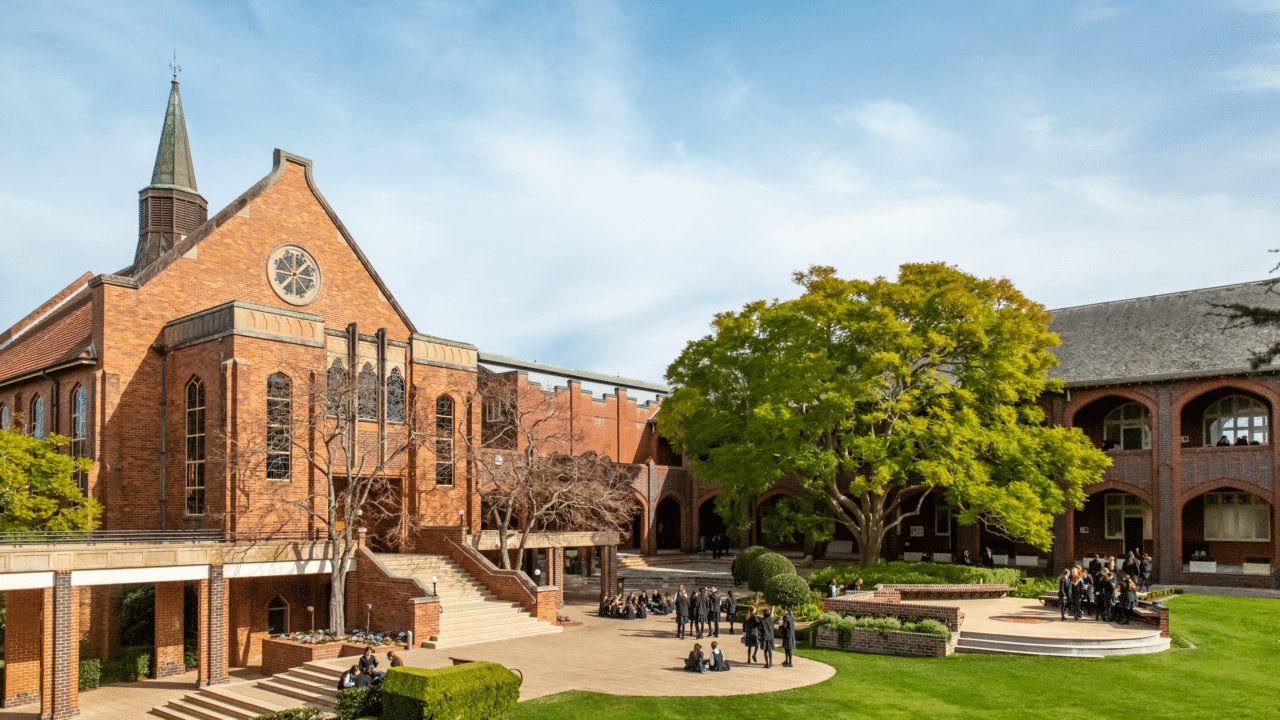
I commenced my secondary education at Pymble as a Day girl in 1999. I remember the nerves as I walked through the gates in my too-long school uniform and bright summer hat. As a sporty maths nerd from a small town north of Newcastle, I was about to join a Year 7 group that was six times the size of my previous cohort. Despite initially being slightly overawed by the expansive grounds, vast range of co-curricular activities and countless new faces, it didn’t take long to get to know my peers, some of whom are still my closest friends today.
Memories of my years at the College
Throughout my schooling, I took full advantage of all the sporting opportunities Pymble offered, including gymnastics, diving, hockey, cricket, athletics, tennis and swimming. I particularly enjoyed the team camaraderie, the representative opportunities available and, of course, the post-season celebrations. I looked up to the older students and coaches for guidance and learned valuable skills both on and off the pitch.
From an academic perspective, I enjoyed maths, science and PDHPE more than any other subjects at school. I was naturally drawn to the more ‘black and white’ domains of numbers, physiology and health. The wide range of subjects available at Pymble, as well as the encouraging academic staff, helped cultivate my thirst for knowledge, self-reflection and constant pursuit of ‘why’ or ‘what if’.
Year 13 and beyond
My interest in maths, science and health led to my BSc (Nutrition Dietetics) and BAppSc (Exercise Sport Science) degrees at Sydney University. Now, as an Accredited Practising clinical Dietitian (APD), I generally see hospital patients who are unwell and/or have a chronic medical condition. Although a highly competitive and underfunded industry, I have been privileged to work in regional and tertiary referral hospitals in both adult and paediatric settings.
My current role as a senior paediatric metabolic dietitian at the Children’s Hospital Westmead is by far the most challenging, interesting and rewarding career path I could have hoped for. I treat children with rare inborn errors of metabolism (IEM) – genetic conditions resulting in an enzyme deficiency that impacts the ability to process certain food nutrients.
To give an example, a newborn baby may present at hospital sleepy, not feeding well and vomiting because they are unable to use fat (or protein) for energy. The team of doctors, nurses, lab scientists and dietetic colleagues will work together to make a diagnosis, develop a treatment and feeding plan, and monitor progress ongoing. Specialised and restrictive diets are often required, such as very low protein, very low fat, ketogenic/high fat, or frequent carbohydrate. For some of these children, eating the wrong foods may, in the worst case, lead to their death; for others, intellectual impairment, heart failure or severe muscle pain may result. The medical and nutritional complexity is high, feeding requirements change dramatically through infancy to adolescence, and for many of these conditions we don’t comprehensively understand the physiology or best treatment modality.

What I love about my role is the relationship we build with the child and their family right from the first week of life through to their 18th birthday; empowering them to first understand and then implement their food-based medical therapy. I am often amazed by the resilience these patients demonstrate despite their restricted (and sometimes isolating) lifestyle. I am also fortunate to collaborate with and learn from a team of incredibly supportive and intelligent colleagues, which very much balances out the demanding workload and tiring commute.
For every student who has ever questioned why they need to learn algebra (we’ve all been there), I use it daily in my work, alongside biology, chemistry and physiology.
My enjoyment of athletic endeavours has extended strongly into adulthood. I have had the fortune of being selected to play high grade club hockey, compete at Masters national level diving and achieve high success in SwimRun and ocean swimming races. The appeal with each of these activities is the social engagement, mental health benefits, experiential learning and the satisfaction of a goal achievement after many hours of hard work, all elements fostered at Pymble.

What’s next for me?
In the near future I plan to move more into research within my patient group. Although there is a large scope and a great need, the rarity of these conditions can be a barrier from both a funding perspective as well as gaining statistical validity due to the low patient study numbers. Campaigns like ‘Jeans for Genes Day’ (of which two of my patients are the faces) are great for raising awareness for rare conditions, however the funds often go into research in the laboratory understanding of these conditions rather than to directly helping the patient. I am hoping to change that through my research endeavours by working with new nutritional treatments for these types of patients.
Recently, I have taken up triathlon and competing in half ironman events, with a full ironman in sight later in the year.
While I am still a sporty maths nerd, my years at Pymble helped develop many other attributes which shape the way I approach current facets of life: confidence, tenacity, mental strength, drive, passion and determination. I am able to reflect on the opportunities I had and friendships I made, and also appreciate that my career is not just a satisfying achievement, but also brings purpose and fulfilment to my life and the opportunity to contribute to the lives and wellbeing of others.