
How I came to Pymble
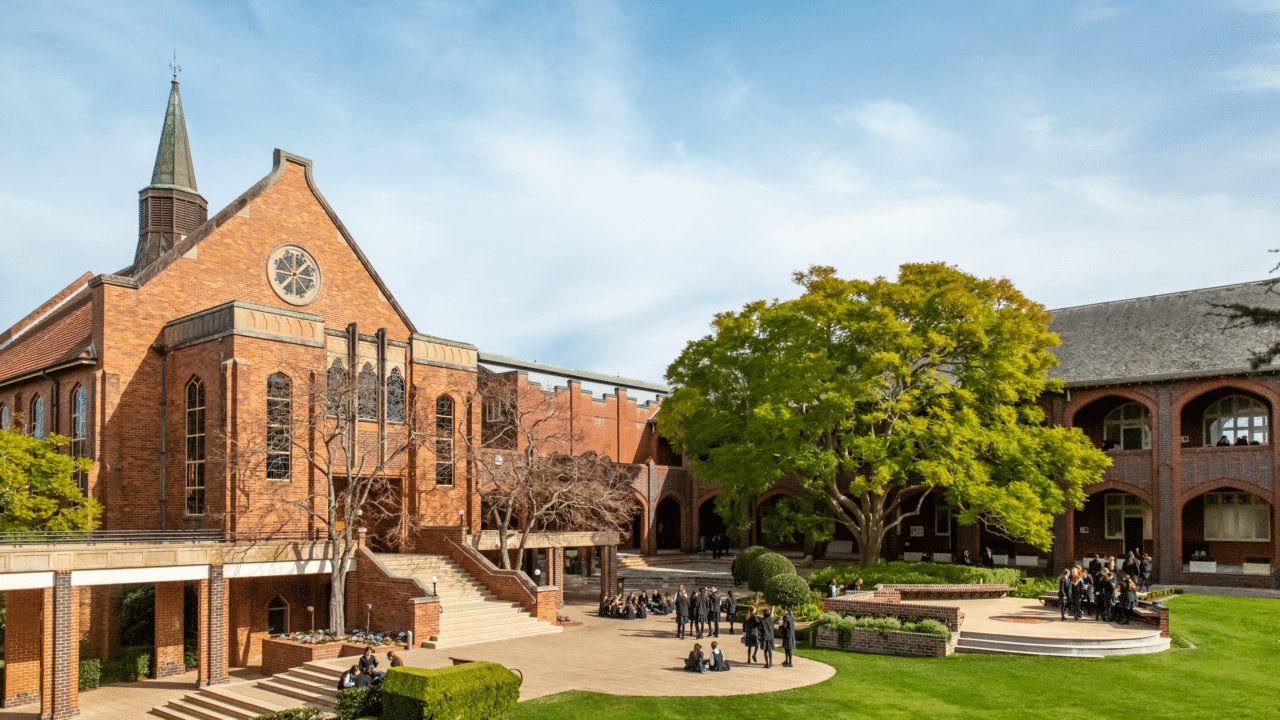
I first walked through Pymble’s gates in 2010 as a Year 7 Day girl. I marvelled at the beautiful grounds and friendly faces of teachers, staff and fellow students, and was immensely excited to start my Pymble journey. As a Year 7 student, my academic interests were not yet fully formed, so I dedicated myself to doing my very best in all the subjects offered.
Memories of my years at the College
Throughout my first year at Pymble, I developed a strong interest and predilection for maths and science, especially astrophysics, which was covered as a term-long topic in science. I vividly recall the passion and excitement with which my science teacher taught all the topics, and I am deeply thankful that he saw my interest in astronomy and took the time to discuss my interest outside of class.
My first venture into astrophysics research occurred in Year 8, when I was invited to take part in the Scholar’s Program. I was given the chance to choose any topic of interest and complete a year-long research project with help from a mentor. I seized the opportunity to delve into Modern Physics, including Newton’s laws, Einstein’s special theory of relativity, general theory of relativity, and the possibilities of a unified theory of gravity. This project confirmed my interest in astrophysics and planted a seed of interest in astrophysics research in my mind.
In my second year of the Scholar’s Program, in Year 9, I expanded my research focus to quantum physics and quantum information, and developed an interest in physics overall. When it was time to decide which subjects to study at the Senior School level, my Scholar’s Program experiences motivated my decision to study Physics and Extension 2 Mathematics.
In addition to the Scholar’s Program, which provided valuable mentored research experience, Pymble’s strong academic coursework ensured that I had an extensive foundation in mathematics and the sciences. Starting from a mathematics placement assessment at the beginning of Year 7, I was very fortunate to have been part of accelerated mathematics classes. I was able to quickly develop a strong mathematical toolkit, which is extremely important for physics since mathematics is the language of science. In fact, much of the study skills and content taught in Years 11 and 12 translated well to my years at university and were vital to my later success.
Towards the end of Year 10, I decided to pursue physics or astrophysics at a tertiary level, and chose to prepare applications to universities in Australia, the UK and the USA. Since universities in the USA required unfamiliar examination metrics, my academic efforts were spread thinly across many different pursuits: school assessments, HSC exams, the ACT exam, the PSAT exam and the SAT exam. Academically, this was an incredibly challenging period, but ultimately I was lucky to have multiple choices of universities in all three countries.
Year 13 and beyond
After contacting professors and inquiring about research opportunities available for incoming students, I decided to attend the University of California: Los Angeles (UCLA) as a Physics major.
At UCLA, I was able to commence research from the first day of my undergraduate career. My first project was with Professor Michael Fitzgerald in the field of astronomy instrumentation, through which I gained important programming and data analysis skills. My fluency in the python programming language from my first research project allowed me to join Professor Smadar Naoz’s dynamics group at the beginning of my second year.
I spent the rest of my time at UCLA working with Professor Naoz on triple-body dynamics, leading to my first first-author publication in an academic journal in 2019 just before my final year at UCLA. I was also very fortunate to have worked with Professor Jim Fuller at the California Institute of Technology (Caltech) in the summer between the penultimate and last year of my undergraduate degree, leading to a second first-author publication studying oscillations in binary stars which was published in 2020, just after graduation.
Throughout my time at UCLA, I maintained my academic performance and was fortunate to receive continuous support and awards through research prizes, academic prizes and research programs. I graduated with Summa Cum Laude, Departmental Highest Honors, College Honors and a Dean’s Prize for Excellence in Science in June 2020. My academic performance and accolades, combined with my research experience and publications allowed me to apply to graduate studies in astrophysics with the full encouragement and support of my advisors and department at UCLA.
I applied to 20 different universities in the USA for a PhD in astronomy or astrophysics, and was very fortunate and shocked to receive 19 acceptances. Making a choice of which school to attend for graduate studies was very challenging, and it came down to some ‘big players’ such as Harvard University, Princeton University, Caltech, the Massachusetts Institute of Technology (MIT), Yale University, Cornell University, Columbia University and the University of California: Berkeley. I made my decision after a whirlwind of visits and an abundance of careful thought, and began a new chapter at Harvard University.
What’s next for me?
I am currently finishing my first year at Harvard University as an astronomy PhD student and James Mills Peirce Fellow, and I am very excited to be working in the field of general-relativistic magnetohydrodynamic simulations of black hole accretion disks. I am very lucky to be working with Professor Ramesh Narayan, Dr Matthew Liska, Dr Koushik Chatterjee and Professor Alexander Tchekhovskoy (Northwestern) in this exciting field, and I am currently preparing a first-author publication.